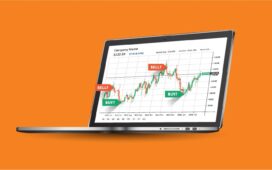
Foreign exchange trading means the buying and selling of currencies in the international foreign exchange market. Unlike conventional stock exchanges, the forex market functions in different parts of the world and is open for business round the clock throughout weekdays. The prices of currency pairs continuously fluctuate depending on things like interest rates, inflation, economic growth, and geopolitics among other factors.
A foreign exchange trading strategy helps you to plan when to enter or leave a particular position in the forex market.
What Are Forex Trading Strategies?
A forex trading strategy is an approach that a trader can use to analyze currency market conditions and determine possible trading opportunities. The forex trading strategy can be based on price actions, economic indicators or trends, among others.
Some of the popular forex trading strategies are:
- Trend trading: This strategy is applied when traders detect either an uptrend or downtrend and trade in the direction of the trend.
- Range trading: Range trading involves detection of support and resistance lines and trading using a particular range.
- Breakout trading: Here, a trader enters the market when a currency pair passes either the support or the resistance line.
- News based trading: News-based trading depends on economic news, central bank news and geopolitics news, among others.
- Position trading: Positional trading takes place over a longer period, and it is based on fundamentals and trends.
There are several factors to consider in determining the right trading strategy.
Understanding Currency Market Trends
Currency prices are influenced by the relative strength of two economies because forex transactions involve currency pairs. For example, when trading USD/INR, the movement of the pair reflects changes in the value of the US dollar relative to the Indian rupee.
Several factors can influence these movements:
Interest Rates
Central bank interest rate decisions can significantly affect currency valuations. Higher interest rates can make a currency more attractive to investors seeking potentially higher returns, although the actual market reaction depends on expectations and broader economic conditions.
Inflation
Persistent inflation can influence purchasing power and monetary policy. Traders therefore monitor inflation data when assessing possible currency movements.
Economic Indicators
Employment figures, GDP growth, manufacturing activity and trade data can provide insights into the health of an economy and influence market expectations.
Geopolitical Events
Elections, conflicts, trade policies and international developments can increase market uncertainty and lead to sharp currency movements.
Market Sentiment
Investor confidence can influence demand for currencies. During periods of uncertainty, market participants may shift towards currencies they perceive as relatively stable, affecting exchange rates.
Popular Tools for Forex Analysis
Forex traders generally use two broad forms of analysis.
- Technical analysis: examines historical price and volume data to identify patterns and trends. Traders may use moving averages, trend lines, support and resistance levels and momentum indicators.
- Fundamental analysis: evaluates economic and financial factors that may affect currency values. This includes monetary policy, inflation, economic growth and employment data.
Many traders combine both approaches. Technical indicators can help identify potential entry or exit points, while fundamental analysis can provide context for broader market movements.
Managing Risk in Forex Trading
Forex trading carries substantial risk because currency prices can move quickly. Leverage can increase both potential gains and losses, making risk management particularly important.
Traders may consider the following measures:
- Set a predetermined stop loss to limit potential losses.
- Avoid risking an excessive portion of available capital on a single trade.
- Consider the impact of leverage before opening a position.
- Diversify exposure where appropriate rather than concentrating on one currency pair.
- Maintain a trading plan and avoid making decisions based solely on short term market movements.
- Review positions regularly as economic conditions and market expectations change.
It is also important to distinguish between currency trading and ordinary foreign exchange requirements. Someone transferring funds internationally may be more concerned with the applicable exchange rate, fees and transaction process than with short term currency speculation. For example, the remittance rate can affect how much the recipient ultimately receives when money is transferred internationally.
Forex Trading and Currency Transfers
Forex markets are also relevant to individuals and businesses dealing with international payments. Students paying overseas education expenses, businesses making international payments and individuals sending funds abroad may all be affected by exchange rate movements.
An outward remittance involves sending money from India to a foreign country for permitted purposes. The final amount received can depend on the prevailing exchange rate, applicable charges and the purpose and structure of the transaction.
However, currency conversion for a genuine payment should not be confused with speculative forex trading. The objectives, risks and regulatory considerations can be different.
Key Considerations Before Trading Forex
Before adopting a forex strategy, traders should understand the currency pair being traded, the factors that influence it and the risks associated with leverage. Back testing a strategy using historical data can help assess how it might have performed under different market conditions, although past performance does not guarantee future results.
A clear trading plan should define entry conditions, exit levels, position size and maximum acceptable loss. Keeping a record of trades can also help identify recurring mistakes and improve decision making over time.
Conclusion
Forex trading strategies provide a framework for navigating the currency market, but no strategy can eliminate market risk. Successful participation requires an understanding of economic trends, technical indicators, monetary policy and market sentiment, alongside disciplined risk management.
Whether currency movements are being studied for trading or for international transactions, understanding exchange rates and the factors driving them can help individuals make better informed financial decisions. For anyone considering forex trading, gaining adequate knowledge and assessing personal risk tolerance should come before committing capital.